

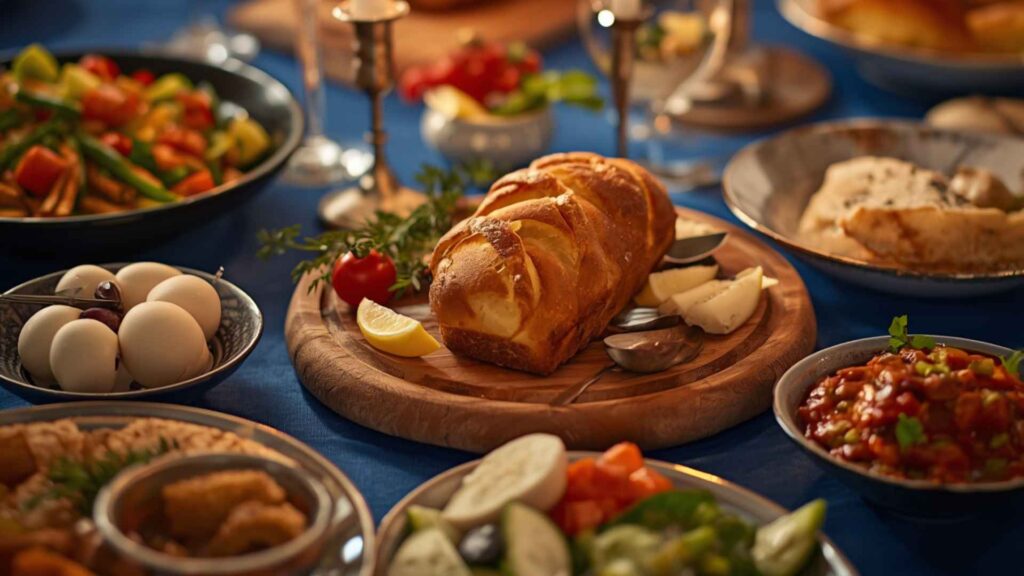
Every cuisine tells the story of the people who created it. French food tells the story of seasons and the philosophy that meals are the most important hours of any day. Italian food tells the story of regions and the conviction that four ingredients done perfectly beat thirty done adequately.
Jewish food tells a more complicated story. A story of movement — across continents, across centuries, often under circumstances that were not chosen. A story of adaptation — taking the ingredients and techniques of wherever Jewish people found themselves and making something distinctly Jewish from them. And a story of memory — because many of the foods on the Jewish table today are not simply recipes but the edible version of a history that was often difficult to hold onto in any other form.
This is the complete guide to traditional Jewish foods — what they are, where they come from, when they are eaten, and what they actually taste like. From the challah that opens every Shabbat table to the gefilte fish that divides opinion in every Jewish family, to the cholent that has been warming ovens since before modern kitchens existed.
|
Food |
Origin |
When eaten |
Kosher status |
|
Challah |
Eastern Europe |
Every Shabbat and Yom Tov |
Pareve (usually) |
|
Gefilte fish |
Eastern Europe |
Shabbat starter, Passover |
Pareve |
|
Chicken soup |
Eastern Europe |
Shabbat, Yom Tov, illness |
Meat |
|
Cholent |
Eastern Europe / Global |
Shabbat lunch (every week) |
Meat |
|
Kugel |
Eastern Europe |
Shabbat, Yom Tov |
Meat or Pareve |
|
Brisket |
Eastern Europe |
Yom Tov, celebrations |
Meat |
|
Latkes |
Eastern Europe |
Chanukah |
Pareve or Dairy |
|
Rugelach |
Eastern Europe |
Year-round |
Dairy or Pareve |
|
Honey cake (lekach) |
Eastern Europe |
Rosh Hashanah |
Pareve |
|
Hamantaschen |
Eastern Europe |
Purim |
Pareve or Dairy |
|
Tzimmes |
Eastern Europe |
Rosh Hashanah, Passover |
Pareve or Meat |
|
Lokshen |
Eastern Europe |
Shabbat (in soup or kugel) |
Pareve |
|
Bagel |
Eastern Europe |
Year-round |
Pareve |
|
Kneidlach |
Eastern Europe |
Passover, Shabbat |
Meat or Pareve |
|
Sufganiyot |
Israel / Global |
Chanukah |
Pareve or Dairy |
|
Hummus |
Middle East / Israel |
Year-round |
Pareve |
|
Shakshuka |
North Africa / Israel |
Year-round, brunch |
Dairy or Pareve |
Jewish food is not one cuisine but many, shaped by two great branches of the diaspora. Ashkenazi Jews — from Eastern and Central Europe — developed a cuisine built around root vegetables, carp, potatoes, and heavy warming stews. This tradition produced challah, gefilte fish, cholent, kugel, and rugelach. Sephardi Jews — from the Iberian Peninsula, North Africa, and the Middle East — developed a completely different cuisine: fragrant with spices, built around rice, legumes, olive oil, and the produce of the Mediterranean. The Sephardi tradition produced Moroccan fish with chermoula, Persian rice with herbs, Syrian stuffed vegetables, Iraqi kubba.
Most of what the general public recognises as ‘Jewish food’ is Ashkenazi, because Ashkenazi Jews made up the majority of Jewish immigration to the UK and America. But Sephardi food is equally ancient, equally rich, and increasingly present in UK Jewish homes.
The phrase “limited kosher food access” is easy to write and hard to fully appreciate if you have grown up in or near North West London. Here is what it actually means in the daily life of a family keeping kosher in, say, Bristol.
It means that every supermarket run involves checking every single product for a kosher symbol. It means that the weekly challah — the bread that anchors Shabbat — either needs to be baked at home, brought back from a trip to London, or ordered online in advance and timed to arrive before Friday. It means that kosher meat requires either a trip that a Londoner would consider absurd for a food shop, or a monthly bulk order planned well in advance. It means that Rosh Hashanah round challah, which sells out in Golders Green by Wednesday before the holiday, requires even more forward planning. It means that the casual Friday afternoon “I forgot the grape juice” moment — entirely manageable in Hendon — is a genuine problem.
It also means that keeping kosher with any seriousness requires a level of organisation and planning that simply is not expected of Jewish families in North West London. The Londoner can forget things. The family in Edinburgh cannot.
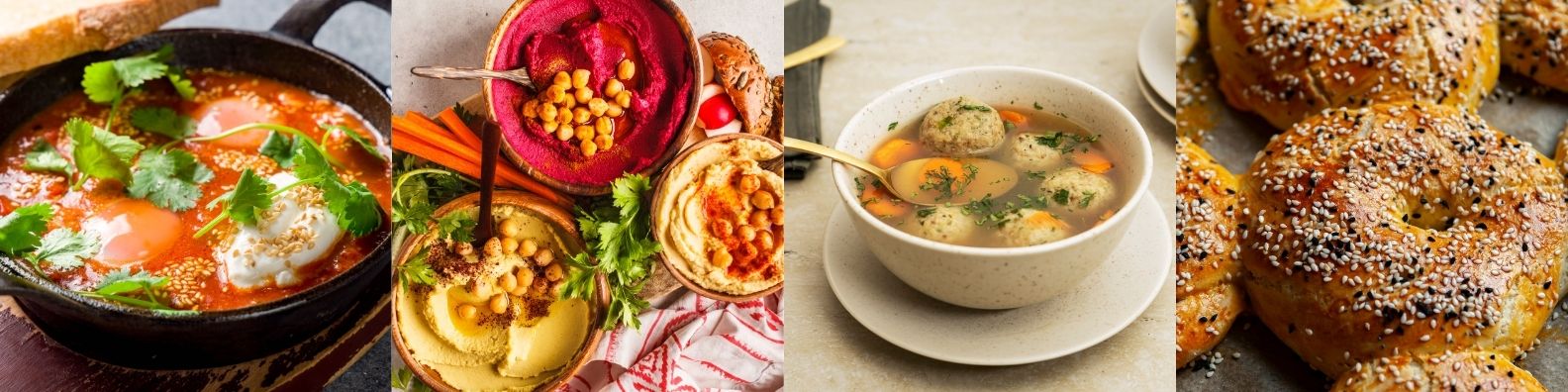
Pronounced: KHAH-lah (the CH is guttural, like the Scottish ‘loch’)
What it is: A braided, enriched bread made with eggs, oil, and a small amount of sugar, glazed with egg wash before baking.
Challah is the bread of the Jewish table — placed at the centre of every Shabbat and Yom Tov meal and covered with a decorative cloth until after the Kiddush blessing over wine. Two loaves are always used, representing the double portion of manna that fell on Fridays during the forty years in the desert.
The characteristic braid — typically three strands, sometimes six — gives challah its distinctive appearance. The egg-enriched dough produces a bread that is soft and slightly sweet, with a golden, shining crust from the egg glaze. It is pulled apart rather than cut at the table, salted before eating, and utterly unlike any supermarket bread.
For Rosh Hashanah, challah becomes round rather than braided — a spiral with no beginning and no end, representing the cycle of the year. At Rosh Hashanah, challah is dipped in honey rather than salt. The round Rosh Hashanah challah is one of Sabeny’s most sought-after products every year. You can shop for Challah here
Pronounced: geh-FIL-teh fish
What it is: Poached fish balls or patties made from ground carp, mixed with onion, egg, and matzo meal.
No Jewish food generates more divided opinion than gefilte fish. People who grew up eating it associate it with the smell of their grandmother’s kitchen on Friday afternoon. People encountering it for the first time frequently need a moment.
The word gefilte means ‘filled’ in Yiddish — the original preparation involved stuffing the fish mixture back into the skin of the whole fish. It is almost always served cold as a starter, with a sharp horseradish sauce called chrain and a slice of cooked carrot.
Gefilte fish is central to two occasions: the Friday night Shabbat meal, where it serves as the fish starter before chicken soup, and the Passover Seder. The sweet versus savoury debate — Polish families made it sweet, Lithuanian families made it peppery — is one of the defining fault lines of Ashkenazi Jewish food.
Also known as: Jewish penicillin
What it is: A clear, golden broth made from a whole chicken simmered for hours with onion, carrot, parsnip, celery, and herbs.
Chicken soup is the most universal Jewish food — present in every Jewish community worldwide. The specific vegetables vary by tradition; the principle is constant: a whole chicken, simmered slowly until the broth is rich, golden, and deeply flavoured.
The Shabbat chicken soup is served with accompaniments floating in the broth. Kneidlach (matzo balls) are the most classic — dumplings made from matzo meal, egg, and chicken fat, which should be light and fluffy rather than dense. Lokshen (thin egg noodles) are an alternative. Some families add kreplach — small pasta parcels filled with meat.
Studies have suggested that chicken soup genuinely has mild anti-inflammatory properties, consistent with the folk wisdom that a bowl of chicken soup is the correct response to almost any ailment.
Pronounced: CHUH-lent
What it is: A slow-cooked Shabbat stew of meat, potatoes, beans, and barley, put on the heat before Shabbat and eaten at Saturday lunch.
Cholent is the cleverest solution in Jewish cooking. The problem: cooking is not permitted on Shabbat, but the family needs a hot meal for Saturday lunch. The solution: a stew so robust and slow-cooking that it can go on the heat on Friday afternoon, remain there through the night, and be ready at noon on Saturday — without anyone touching it during Shabbat.
The base recipe is ancient: beef brisket or short ribs, potatoes, beans, barley, and onion, covered with water and cooked until everything melts into a thick, deeply flavoured stew. Some families add kishke — a stuffed pastry roll that absorbs the braising liquid. Sephardi versions (‘hamin’) often include eggs cooked whole in the pot, which turn brown and creamy over the long cooking.
The smell of cholent on a Saturday morning, emanating from Jewish homes across a community as people walk to synagogue, is one of the most distinctive sensory signatures of Shabbat.
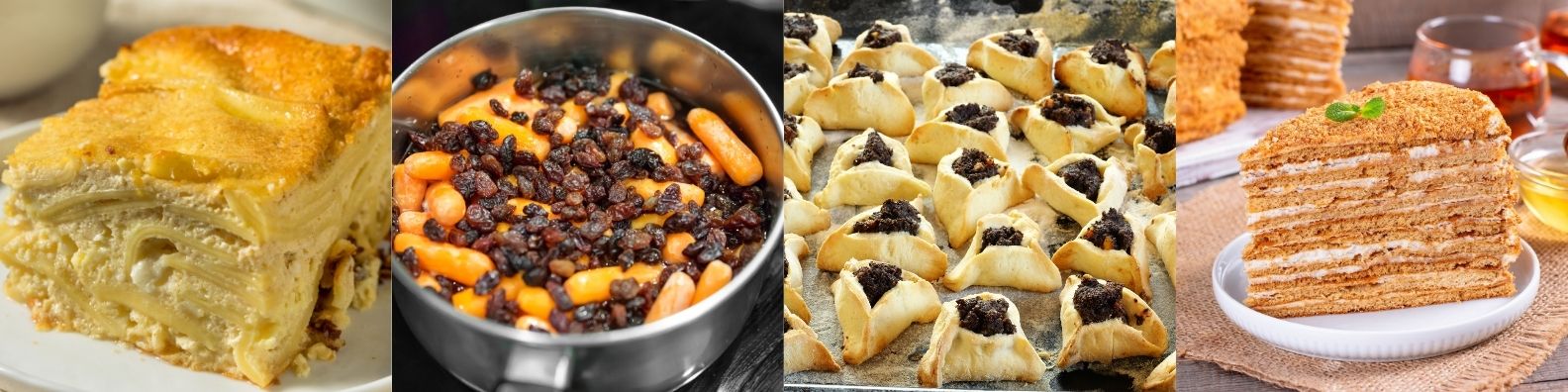
Pronounced: KOO-gel
What it is: A baked pudding — either sweet (lokshen noodle kugel) or savoury (potato kugel), served as a side dish at Shabbat and Yom Tov.
Kugel is the dish that most surprises non-Jewish people, because it sits in a category — sweet pudding served as a side dish with a main course — that does not exist in most other cuisines. Yet at the Shabbat table, a lokshen kugel made with egg noodles, eggs, sugar, and cinnamon is a completely natural companion to roast chicken.
There are two main types: lokshen kugel (sweet noodle kugel) and potato kugel (savoury, made from grated potato and onion — similar to a very large latke baked in a dish).
Like cholent, every family has their version. The lokshen kugel your grandmother made with a caramelised top crust and a custardy centre is a specific, irreproducible thing. This is the defining characteristic of kugel: it is the dish that tastes most like home. You can order your own Kugel here
What it is: A slow-braised cut of beef from the lower chest, cooked in a sweet tomato or wine-based sauce until tender enough to pull apart.
Brisket is the Yom Tov centrepiece. Where an everyday Shabbat features roast chicken, the major holidays — Rosh Hashanah, Passover, Shavuot — bring brisket: a large, forgiving cut of beef that rewards long, slow cooking with a tenderness no quick method can replicate.
The Ashkenazi brisket is typically braised in a sweet tomato sauce with onion, carrot, and garlic, cooked for three to four hours minimum. Brisket became the Jewish Yom Tov meat partly because it is a tough, economical cut suited to the slow cooking that festival occasions could justify, and partly because it comes from the forequarters of the animal — the section that kosher butchers in most Western countries work with.
Pronounced: LAT-kez
What it is: Fried potato pancakes made from grated potato, onion, egg, and flour, served at Chanukah.
Latkes are essentially a potato rosti — grated potato formed into a pancake and fried in oil. The Chanukah connection is the oil: the festival commemorates the miracle of one day’s worth of oil lasting eight days in the Temple, and the tradition of eating foods fried in oil — latkes in Ashkenazi communities, sufganiyot (doughnuts) more globally — is the edible celebration of that miracle.
A properly made latke has a crispy, almost lacy exterior, a soft and creamy interior, and a slight sweetness from the potato. The debate about what to serve with latkes — sour cream (dairy) or apple sauce (pareve) — is the definitive Chanukah argument in every Jewish household.
Pronounced: ROO-geh-lach (the CH is guttural)
What it is: Small rolled pastries made from a cream cheese or yeast dough, filled with cinnamon, chocolate, jam, or nuts.
Rugelach are the Jewish pastry that most people reach for without being able to explain quite why they are so compelling. The cream cheese dough — soft, slightly tangy, rich without being heavy — is rolled out, spread with filling, cut into triangles, and rolled into small crescents before baking. The result is simultaneously flaky, soft, sweet, and savoury in a single bite.
Classic fillings include cinnamon and sugar, chocolate, apricot jam, and chopped nuts. Rugelach appear at everything from Shabbat afternoon tea to shiva houses to bar mitzvah receptions — and are the item most likely to be ordered online by Jewish families outside London who cannot get them locally.
Pronounced: LEH-kach
What it is: A dense, spiced cake sweetened with honey rather than sugar, made for Rosh Hashanah and the High Holiday period.
Lekach is the taste of Rosh Hashanah. A proper lekach is dense and moist, sweetened entirely with honey, and fragrant with warm spices — cinnamon, ginger, cloves, sometimes coffee — that give it a depth that sugar-sweetened cake cannot replicate.
There is also a tradition of giving lekach as a gift on Erev Yom Kippur — the sweet cake serving as a symbolic wish for a sweet verdict in the heavenly judgment of the Day of Atonement. Lekach keeps well and improves over a few days — one of the few cakes that is genuinely better the day after baking. Shop here
Rosh Hashanah begins Friday September 11 2026
Pronounced: HAH-men-tash-en
What it is: Three-cornered filled pastries eaten at Purim, traditionally filled with poppy seed paste, jam, or chocolate.
Hamantaschen are three-cornered cookies that take their shape from the hat (or ears) of Haman, the villain of the Purim story. The Purim story, told in the Book of Esther, recounts how the Jewish community in ancient Persia was saved from genocide through the courage of Queen Esther. Eating hamantaschen literally ‘Haman’s pockets’ is the edible version of the holiday’s triumph.
The traditional filling is poppy seed paste (mohn in Yiddish) — a dense, slightly unusual filling with a distinct old-world flavour. Modern alternatives include chocolate, Nutella, halva, and various jams. At Purim, hamantaschen are included in mishloach manot, the gift packages of food traditionally sent to friends and neighbours on the holiday. Sabeny sells Hamantaschen exclusively during Purim.
Pronounced: TSIM-ess
What it is: A sweet braised dish of carrots, dried fruit, and sometimes meat, associated with Rosh Hashanah and Passover.
Tzimmes is the most symbolic of the Ashkenazi Yom Tov foods — and the word has entered Yiddish as a phrase meaning to make a big fuss, which suits the dish perfectly. The base is carrots, whose Yiddish name sounds like the Hebrew word for decree, making them a Rosh Hashanah food carrying the meaning ‘may bad decrees be torn up.’ To the carrots are added prunes, dried apricots, honey, and sometimes chunks of brisket, slow-cooked until everything is sweet, sticky, and tender.
Tzimmes divides the Jewish table into those who love it unreservedly and those who cannot understand why anyone would serve something so sweet as a side dish. At a Rosh Hashanah table overloaded with symbolic sweetness, it fits perfectly. Know more about Simanim symbolic foods here.
Pronounced: LOCK-shen
What it is: Thin egg noodles — the Yiddish word for pasta — used in chicken soup and in lokshen kugel.
Lokshen is simply the Yiddish word for noodles — specifically the thin, flat egg noodles that were the Jewish version of pasta across Eastern Europe. The same basic concept as Italian pasta, developed independently, with eggs giving the noodles their yellow colour and rich flavour.
Lokshen appear in two contexts: floating in chicken soup, and as the main ingredient in lokshen kugel, where they absorb egg and sugar and bake into something considerably greater than a bowl of noodles has any right to become.
Pronounced: BAY-gel
What it is: A ring-shaped bread roll made from yeasted dough that is boiled before baking, giving it a dense, chewy interior and shiny crust.
The bagel is the Jewish food that has most successfully crossed into mainstream culture — so successfully that many people who eat them daily have no particular Jewish association. They originated in Jewish communities in Poland, and the defining technique — boiling the dough ring before baking — produces a crust that no oven-only bread can replicate.
The traditional Jewish Sunday bagel brunch — bagels, cream cheese, smoked salmon, sliced tomato, red onion, and capers — is one of the most widely recognisable Jewish food rituals in the UK. Get a bagel of your choice – click here
Pronounced: keh-NAID-lach
What it is: Dumplings made from matzo meal, egg, and chicken fat, served in chicken soup.
Kneidlach are the dumpling of Jewish cooking — and like dumplings everywhere, their quality is a matter of intense family loyalty. The kneidlach debate has two sides: floaters (light, airy dumplings) and sinkers (denser, chewier ones). The difference is usually the ratio of liquid to matzo meal and the mixing technique.
Kneidlach are intrinsically tied to Passover, because matzo meal is a Passover-compliant ingredient. But they appear in chicken soup throughout the year in many households, because the combination of clear golden broth and a perfectly made kneidl is one of the most satisfying things in Jewish cooking.
Pronounced: soof-gah-nee-YOTE
What it is: Jam-filled doughnuts, deep-fried and dusted with icing sugar. The Israeli and increasingly global Chanukah food.
Sufganiyot are to Chanukah in Israel what latkes are to Ashkenazi communities — the primary fried food commemorating the miracle of the oil. A sufganiyah is a ball of yeasted dough, deep-fried until golden, injected with jam (classically strawberry), and dusted with icing sugar. They have spread from Israel globally and are now found in UK kosher bakeries throughout Chanukah.
What it is: A dip made from cooked chickpeas blended with tahini, lemon juice, garlic, and olive oil.
Hummus is not exclusively Jewish — it is eaten across the Middle East by people of all backgrounds. But it is deeply embedded in Israeli food culture and has become one of the most prominent Israeli food exports. In UK Jewish communities, hummus appears on every Shabbat table in Sephardi and Mizrahi households, and increasingly in Ashkenazi homes where Israeli food culture has influenced the table.
The best hummus — as any Israeli will tell you — is made from dried chickpeas cooked until very soft and blended while warm with generous tahini, fresh lemon juice, and garlic. The result bears the same relationship to supermarket hummus that a freshly baked challah bears to sliced white bread.
Hummus is also one of the best selling products on Sabeny. Check it out here.
Pronounced: shak-SHOO-kah
What it is: Eggs poached in a spiced tomato and pepper sauce. A North African and Israeli breakfast or brunch dish.
Shakshuka is the Sephardi Jewish dish that has most successfully crossed into mainstream British food culture in the past decade — it now appears on brunch menus across the country. The dish originates in North Africa and was brought to Israel by Mizrahi Jewish immigrants, where it became a national institution.
The preparation is simple: tomatoes, red pepper, garlic, cumin, and paprika, simmered until thick, then eggs cracked directly into the sauce and cooked until set. Eaten directly from the pan with good bread for scooping, it is one of the most satisfying quick meals in the Jewish kitchen.
Every dish described in this guide exists in as many versions as there are Jewish families who make it. The cholent your neighbour makes is not the same as the cholent three streets away. This variation is not a flaw — it is one of Jewish food culture’s most distinctive features. Jewish communities have been dispersed across almost every country for two thousand years, absorbing influences and adapting recipes. The result is not one Jewish cuisine but hundreds of related Jewish cuisines, all recognisably Jewish and all distinctly local.
Sabeny delivers certified kosher food across the UK — fresh challah, rugelach, kosher deli, and the full range of ingredients for every dish in this guide. Free delivery over £85. Order at sabeny.com.
Sabeny stocks everything you need to keep a kosher kitchen — certified kosher meat, dairy, bakery, and grocery delivered to every UK postcode. Free delivery on orders over £85. Shop at sabeny.com.
Already have an account? Sign in
