

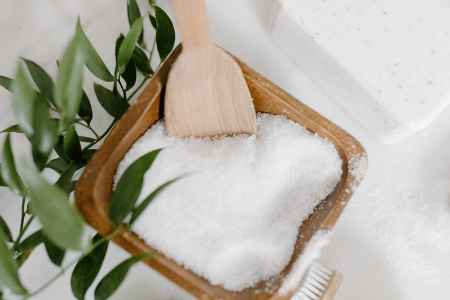
If you have ever cooked from an American recipe, watched a cooking show, or spent any time around professional chefs, you will have encountered kosher salt. It appears in recipes the way salt always has pinched, scattered, dissolved, sprinkled but with an added specificity that regular table salt apparently lacks. Professional kitchens use it almost exclusively. Recipe developers call for it by name. It has, in the past thirty years, gone from a specialist product found in Jewish delis and butchers to the salt of choice in restaurants from London to Los Angeles.
And almost nobody who uses it knows why it is called kosher.
The answer is stranger and more interesting than most people expect. Because kosher salt is not called kosher because it is certified kosher. It is not called kosher because Jewish people use it more than anyone else. It is called kosher because of a specific use in Jewish food preparation that has almost nothing to do with the salt itself, and everything to do with what the salt does to meat.
To understand the name, you need to understand one specific law of kashrut — the Jewish dietary code. Among the many rules that govern what Jewish people who keep kosher can and cannot eat, one of the most fundamental is the prohibition on blood. The Torah states clearly: you shall not eat any blood. This prohibition applies not just to drinking blood, but to consuming meat that still contains blood.
Which creates a problem. Meat, by its nature, contains blood. The shechita process — the specific method of kosher slaughter — removes much of it, but not all. The blood that remains in the muscle tissue of the meat needs to be drawn out before the meat is considered fully kosher to eat. The process of removing this blood is called kashering the meat. And the primary method of kashering meat is salting. Learn more about kosher food here.
The process works like this. After slaughter and inspection, the meat is soaked in cold water for thirty minutes to open the pores. It is then laid on a special slanted board, covered generously in coarse salt, and left for an hour. The salt draws the blood out of the meat through osmosis, pulling it to the surface. The meat is then rinsed thoroughly, usually three times, and the kashering is complete.
The salt used for this process needs to have a specific quality: the crystals need to be large and coarse enough to sit on the surface of the meat without dissolving too quickly into it. Fine table salt dissolves almost immediately on contact with the moist surface of meat and gets absorbed rather than drawing moisture out. You need a salt with large, flat, irregular crystals that will lie on the surface, draw out the blood, and then be rinsed away cleanly.
That salt — the coarse, flat-crystalled, non-iodised salt used specifically for the process of kashering meat — came to be called kosher salt in American English. Not because it was certified kosher. Not because it was produced under rabbinical supervision. But because it was the salt used for the koshering process. The name describes the function, not the product.
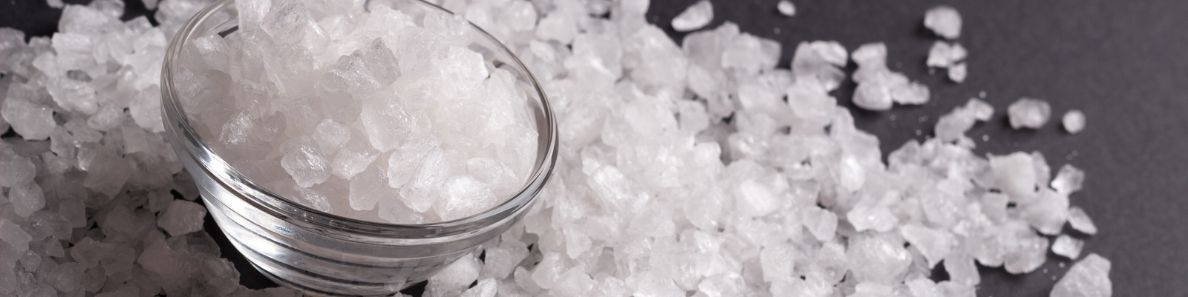
The term kosher salt is predominantly an American one. In the United Kingdom, the equivalent product is typically sold as coarse sea salt, flaked sea salt, or cooking salt none of which carry the same name. In Israel, the same product is called melaach gס, meaning coarse salt. The name kosher salt is essentially an Americanism, coined in the context of the large Ashkenazi Jewish immigrant communities of the late nineteenth and early twentieth centuries in New York and other major American cities.
As Jewish immigrant communities established themselves in the United States, the infrastructure for keeping kosher, kosher butchers, kosher delis, the full apparatus of Jewish food preparation developed alongside them. The coarse salt used in the butchers for kashering meat became known in common parlance as the salt used for koshering, which shortened over time to kosher salt. By the time American food culture began to codify itself in recipes and cookbooks in the mid-twentieth century, the name had stuck.
Diamond Crystal and Morton, the two largest American salt brands, both produce products explicitly labelled kosher salt. Neither product requires rabbinical certification to carry the name. The label refers to the grain size and crystal structure not to any religious status of the salt itself.
This is the question that produces the most confusion, and the answer is: sometimes, but not because of the name.
Plain salt — sodium chloride, whether fine or coarse — is inherently kosher. It is a mineral with no animal or grain derivatives, no fermentation, and no processing that would introduce non-kosher elements. A bag of coarse sea salt with no additives does not require kosher certification because there is nothing in it that could be non-kosher.
However. Many commercially produced salts — including some table salts and some flavoured salts — contain additives. Iodine is added to table salt as a nutritional supplement. Anti-caking agents are added to prevent clumping. Some flavoured salts contain natural flavourings that may or may not be kosher. In these cases, the additives are what require checking, not the salt itself.
Kosher salt — in the American sense, meaning coarse flat-crystalled non-iodised salt — is typically free of additives, which means it is typically kosher by default rather than by certification. But if you need certified kosher salt for kashrut purposes, look for a recognised hechsher on the packaging rather than relying on the name alone.
Here is where the story gets interesting for anyone who cooks regardless of their religious practice. The properties that make kosher salt effective for drawing blood out of meat — the large, flat crystals, the absence of iodine, the coarse texture — also happen to make it an excellent cooking salt in its own right.
The large crystal size means that kosher salt is easier to pick up and handle than fine table salt. When a chef reaches into a salt cellar and takes a pinch, the large crystals give them a tactile sense of how much salt they are using that fine salt cannot provide. The flat crystal structure also means that kosher salt dissolves more evenly on the surface of food before cooking — distributing flavour more uniformly than a single dense crystal of table salt would.
The absence of iodine matters too. Iodine was added to table salt from the 1920s onwards as a public health measure to prevent iodine deficiency. It was enormously successful as a nutritional intervention. But iodine has a slightly metallic, bitter flavour at high concentrations, and it can discolour certain foods. Professional chefs — who use salt in much larger quantities than home cooks and are more sensitive to its flavour contribution — noticed the difference and switched to non-iodised kosher salt as a result.
By the 1990s and 2000s, as American food culture professionalized and cooking shows brought professional techniques into home kitchens, the preference for kosher salt followed. Cookbook authors who had trained professionally specified kosher salt in their recipes because that was what they used. Home cooks who wanted to cook like professionals bought kosher salt. The product went from a specialist Jewish butchery supply to a mainstream cooking staple in the space of about two decades.
Salt type | Crystal structure | Iodine | Best for | Notes |
Table salt | Fine, uniform | Usually yes | Baking, precise measuring | Dissolves quickly. Iodine can add slight bitterness. |
Kosher salt (Diamond Crystal) | Large, flaky, hollow | No | General cooking, seasoning, kashering | Less dense than Morton. Dissolves well. Preferred by many chefs. |
Kosher salt (Morton) | Flat, compressed | No | General cooking, seasoning, kashering | Denser than Diamond Crystal. Same volume = more salt by weight. |
Sea salt (coarse) | Irregular, large | No | Finishing, texture | Harvested from seawater. Mineral flavour varies by source. |
Flaked sea salt (Maldon) | Thin, hollow flakes | No | Finishing on cooked food | Delicate texture. Not for cooking — dissolves instantly. |
Himalayan pink salt | Coarse, irregular | No | Finishing, presentation | Pink colour from iron oxide. Nutritionally similar to table salt. |
The practical difference between kosher salt brands matters more than most people realise. Diamond Crystal kosher salt has a lighter, flakier crystal that dissolves more quickly and takes up more volume per teaspoon. Morton kosher salt has a denser, more compressed crystal. A recipe that calls for one teaspoon of Diamond Crystal requires approximately two thirds of a teaspoon of Morton to achieve the same saltiness. This is why many recipes that specify kosher salt also specify the brand — and why substituting one for the other without adjustment can make a dish significantly over or under-salted. Shop for Kosher Salt here.
The use of salt in kashering meat is the most practically significant role of salt in Jewish law, but it is not the only one. Salt has deep symbolic and ritual significance throughout the Jewish tradition.
The word kosher comes from the Hebrew kasher (כשר), meaning fit, proper, or correct. In Jewish law it refers to food that meets the requirements of kashrut — the dietary code. But the word has entered general English usage far beyond its religious context. Something that is ‘kosher’ in everyday British English is legitimate, acceptable, above board. ‘Is this kosher?’ means ‘is this legitimate?’ not ‘does this meet Jewish dietary requirements.’
The linguistic journey from a Hebrew word meaning ‘fit’ to a widely used English colloquialism for ‘legitimate’ mirrors the journey of kosher salt itself — from a specific religious and culinary function in Jewish kitchens to a mainstream product used by people who may have no particular awareness of where the name comes from or what it originally described.
Plain salt is inherently kosher it is a mineral with no animal derivatives or processing that would make it non-kosher. Kosher salt, in the American sense of coarse non-iodised salt, is typically kosher by default because it contains no additives. However, kosher salt is not called kosher because it is certified kosher. It is called kosher because it is the salt used in the process of kashering drawing blood out of meat to make it permissible under Jewish law. If you need certified kosher salt, look for a rabbinical certification symbol on the packaging rather than relying on the name alone.
Professional chefs prefer kosher salt for three main reasons. First, the large flat crystals are easier to pick up and pinch, giving the chef a tactile sense of how much salt they are using. Second, kosher salt contains no iodine, which can add a slightly metallic flavour at high concentrations. Third, the flat crystal structure dissolves more evenly across the surface of food before cooking. These properties originally valued for the religious function of kashering meat happen to make kosher salt an excellent all-purpose cooking salt.
Diamond Crystal has a lighter, flakier, hollow crystal structure. Morton has a denser, more compressed flat crystal. Because of this difference in density, one teaspoon of Diamond Crystal contains significantly less salt by weight than one teaspoon of Morton. A recipe calling for one teaspoon of Diamond Crystal requires approximately two thirds of a teaspoon of Morton. This is why many professional recipes specify the brand, and why substituting one for the other can throw seasoning off significantly.
In most cooking contexts, yes. Both kosher salt and coarse sea salt are non-iodised, have large crystals, and behave similarly in cooking. The primary difference is flavour: sea salt may carry trace minerals from the seawater it was harvested from, giving it a slightly more complex flavour than kosher salt, which is purer sodium chloride. For finishing dishes adding salt at the last moment for texture and flavour a good flaked sea salt like Maldon is generally preferred over kosher salt. For seasoning during cooking, kosher salt and coarse sea salt are interchangeable.
No. Plain salt does not require rabbinical certification or blessing to be considered kosher. Salt is a mineral it has no animal or dairy components, no fermentation, and typically no additives that would raise kashrut concerns. The name kosher salt describes how the salt is used (in the kashering process) rather than indicating any rabbinical certification of the salt itself. Flavoured or specialty salts with added ingredients would need to be checked for their specific additives, but plain kosher salt requires no special certification.
Sabeny stocks certified kosher food delivered to every UK postcode. Every product is verified under KLBD, Kedassia, or equivalent supervision. Free delivery on orders over £85. Shop at www. sabeny.com
Already have an account? Sign in
